Salt Nation News
Abakaliki Town
Abakaliki Town Highlights: Ebonyi State capital. Largest town. Largest market. Location of Government House, State House of Assembly, State courts and several other ministries and parastatals. Location of Ebonyi State University (EBSU), Federal Medical Center & Teaching Hospital, dozens of hotels and leisure facilities. Abakaliki is the capital of Ebonyi State and the largest town in the State. It is located at the intersection of Enugu, Afikpo and Ogoja Roads. Before it became state capital in 1996, Abakaliki was the headquarters of the Old Ogoja Province which is now part of the neighboring Cross River State. The original inhabitants of Abakaliki were primarily the Izzi, a predominantly agrarian Igbo-speaking community people. With time, people from neighboring villages including the Ezza, Ikwo, Onicha and Ngbo people, as well as migrants and traders from other towns gradually settled in Abakaliki.
Before it became the State capital, Abakaliki was a small town known for its overflowing food markets. The people of Abakaliki and their neighbors were predominantly farmers who took advantage of the abundant and fertile to produce rice, fruits, vegetables, livestock and non-food items like limestone, rocks and gravel – all of which are abundant throughout the area. Since it became state capital, Abakaliki has grown into a much larger town with modern facilities and a workforce that includes a growing number of civil servants, service providers and migrant workers who commute to work from neighboring towns and states.
Abakaliki Town Highlights: Ebonyi State capital. Largest town. Largest market. Location of Government House..
Some of the facilities in and around present day Abakaliki include:
- The State Government House and offices for several government ministries and departments.
- The State House of Assembly complex.
- The State High Court complex.
- Ebonyi State University (popularly known as EBSU) which has several campuses in and outside Abakaliki.
- A golf course
- Many quarry factories.
- Food processing factories including dozens of rice mills.
- A fertilizer blending plant.
- A large poultry (Nkali Poultry) reputed to be one of the largest in Nigeria.
- The largest market in Ebonyi State.
- Dozens of hotels, restaurants and night clubs.
- An amusement park and other relaxation joints.
- A Federal medical center and teaching hospital.
Afikpo Town
Afikpo is the second largest town in Ebonyi State and the headquarters of Afikpo North Local Government Area. Twenty-two villages of various sizes make up present-day Afikpo. These include Ozizza, Ohaisu, Nkpoghoro and Itim. The old Afikpo Province once covered areas in Unwana, Edda, Amaseri, and Akpoha. Following the creation of more local governments in Ebonyi State, the administrative boundaries of the old Afikpo Province was redrawn and its geographic size reduced.
Afikpo is the birthplace of several accomplished Nigerian men and women. A notable example is the late Dr. Akanu Ibiam of Uwana, one of the first Igbo medical doctors and former Governor of the Eastern Region. Afikpo is a mecca of ancient Igbo tradition and ceremonial (now antique) masks which have been carefully preserved by the state tourism board. Several archeological findings support the claim that Afikpo civilization existed as far back as the Neolithic age. Mainly farmers and traders, Afikpo is considered a major producer of agricultural products in Nigeria. These include yam, palm produce, maize, groundnut, plantain, banana, cassava, fruits and vegetables. The Akanu Ibiam Federal Polytechnic Uwana is located in Afikpo. So is the Mater Misericordia Specialist Hospital. Mater Misericordia Hospital School of Nursing and Midwifery was one of the first nursing schools established in Nigeria by Irish missionaries and Dr. Akanu Ibiam.
Ebonyi: How Afikpo Deploys Age Grade As Strategy For Rural Devt
Background
Saturday April 20, 2024 would remain evergreen in the annals of the people of Afikpo in Afikpo Local Government Area of Ebonyi State. The town witnessed a beehive of activities and social gatherings as various age groups, families and friends organised different cultural activities to mark the historical event.
The community was draped in different colours and agog as the people celebrated the traditional age grade transition ceremony alongside the traditional change of guards.
These are age-long ceremony and cultural beliefs that were passed down by their progenitors and maintained by them even though it may have undergone transformation at different times. Various age groups, families and friends on his fateful day organised some cultural displays to mark the historical event.
Ag grade ceremony
In Afikpo, the age grade transition ceremony (Change of guards), is a unique and fascinating tradition handed down from generations and observed every eight years on a special eke market day. The ceremony marks the transition of a man into traditional council of elders, which comprised the Ekpuke eto, Essa, Ichie, Onikara and Hori respectively.
The event was not only celebrated as the age-long traditional institution in the land, but also the traditional change of guards of the various age grades across the five communities of Nkpogoro, Uguwegu, Ohaisu, Itim and Ozziza that make up Ehugbo Town Traditional Council. It is a festivity of the antique that attracts indigene of the ancient town of Afikpo, both at home and in Diaspora.
Friends and well-wishers attended the occasion that featured age grade transition, ranging from Isi-Elia, Eto, Essa to Rikweri. New initiates dressed in colourful traditional regalia with loin clothes and long-tail traditional caps to match, according to their age grades.
The different age grades marched from their various traditional village squares to the Essa Traditional Council House at Eke Market Square for inauguration and subsequent handover to new traditional leadership for the next eight years. The age transition ceremony in Ehugbo is a time tested and honoured tradition that serves as a reminder of the importance of community, tradition, and culture.
These are age-long ceremony and cultural beliefs that were passed down by their progenitors and maintained by them even though it may have undergone transformation at different times. Various age groups, families and friends on his fateful day organised some cultural displays to mark the historical event.
Ag grade ceremony
In Afikpo, the age grade transition ceremony (Change of guards), is a unique and fascinating tradition handed down from generations and observed every eight years on a special eke market day. The ceremony marks the transition of a man into traditional council of elders, which comprised the Ekpuke eto, Essa, Ichie, Onikara and Hori respectively.
The event was not only celebrated as the age-long traditional institution in the land, but also the traditional change of guards of the various age grades across the five communities of Nkpogoro, Uguwegu, Ohaisu, Itim and Ozziza that make up Ehugbo Town Traditional Council. It is a festivity of the antique that attracts indigene of the ancient town of Afikpo, both at home and in Diaspora.
Friends and well-wishers attended the occasion that featured age grade transition, ranging from Isi-Elia, Eto, Essa to Rikweri. New initiates dressed in colourful traditional regalia with loin clothes and long-tail traditional caps to match, according to their age grades.
The different age grades marched from their various traditional village squares to the Essa Traditional Council House at Eke Market Square for inauguration and subsequent handover to new traditional leadership for the next eight years. The age transition ceremony in Ehugbo is a time tested and honoured tradition that serves as a reminder of the importance of community, tradition, and culture.
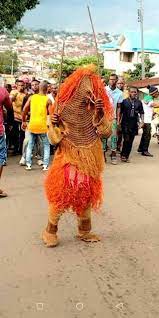
It is a celebration of growth, resilience, and the bonds that unite the people. It is also a testament to the resilience and strength of the people of Afikpo, and a reminder of the rich cultural heritage that they hold dear. In addition, it is a time of unity, celebration, and renewal, and a testament to the power of tradition in shaping the lives of generations to come.
Celebration of unity
Briefing newsmen on the significance of the age grade transition, the member representing Afikpo and Edda Federal Constituency in the House of Representatives, Chief Idu Igariwey, said that the celebration signals the growth, resilience, bonds that unite the people.
heritage, it is a day to remember as it marks the era of new dawn in our traditional age grade system, it is our own democracy day in which new leaders are inaugurated to pilot the affairs of the Ehugbo community in the next eight years.
“The age grade transition ceremony in Ehugbo, is a time honoured tradition that serves as a reminder of the importance of community, tradition, and culture. The change of guards signals the beginning of new traditional leadership in Ehugbo land. “We decided to mark it to honour our traditional institution and those graduating to the various new age brackets of Ekpuke Eto, Ekpuke Essa, Ichie, Onikara, Hori and Igweri.”
Spartan nature
Contributing, the former General Manager of Radio Nigeria, Unity FM, Abakaliki, Nze Okpani Nkama (Junior), attributed the sustenance of the age-grade transition and its longevity to the Spartan nature of the people. This is as he said, “from the age of six, you have become relevant to the society, the male child is integrated into the male dominated system in the land.
“The initiation of the menfolk into manhood in Afikpo which starts at the age of 10, is exactly what the Spartans practice in the upbringing of the male child. “The practice has cemented our social values, the male children are being trained in a military pattern, it is only in Afikpo that we do customary canning.’’
In an interview, two of the newly transited members, Mr Ogbonnia Okpor and Mr. Olughu Okoche, thanked God for granting them life to transit from one age grade to another. “I am glad to announce that I am now of the Ekpuke Essa age grade of the traditional council of elders,” disclosed one of the two elated initiates.
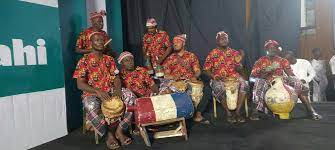
Economic benefits
The ceremony is noted for economically impacting the community and people who benefit from the various economic and social activities that herald the ceremony, with many people setting up different businesses during the period from which they mak
One of the areas of economic boost is in the hospitality business of the community as hotels and guest houses were fully booked by visitors who came in from Abuja, Lagos, Port Harcourt, Enugu, Onitsha, Abakaliki, Calabar, Uyo and other parts of the country and outside the shores of the country to witness the ceremony.
Lecture series
The event was preceded with the Akpokoru Elia inaugural public lecture, with the theme: Age Grade System As Strategy for Rural Development in Igbo land/Ehugbo Village Group in Focus. The lecture series was organised by Afikpo Town Welfare Association in conjunction with Essa Traditional Council and another organisation that is known as Veteran Media.
The lecture was delivered by Dr Ikenna Bismark Unya of the Department of History and International Studies, Alex Ekwueme Federal University, Ndufu Alike Ikwo. Afikpo is the second largest town in Ebonyi State, with its population puts at over half a million people.
The local language of the people, Okwu Ehugbo is a dialect of Igbo, which is the common language among the five south eastern states of Nigeria (Abia, Anambra, Ebonyi, Enugu and Imo). However, most people in Afikpo are fluent in English or the Pidgin version. So interaction with the local people by any visitor who is not the eastern extraction is not an issue, as the people are also warm and hospitable.
Afikpo is said to home, Mecca, of some sort, to Igbo tradition and culture as it bears a sizeable repository of these traditional and cultural elements and practices. Most them have been preserved and observed diligently in present day as with the age grade ceremony.
Some of these traditional and cultural heritage such as the masks are on display in museums and for sale in art galleries worldwide. While several archeological findings support the claim that Afikpo civilisation existed as far back as the Neolithic age. Afikpo is also home to some of Africa’s top traditional dance groups, artists and cultural festivals.
Cultural identity
Afikpo has managed to retain much of its cultural identity, ancestral heritage and celebrated art forms. Many towns of similar size in South Eastern Nigeria have not been so lucky, as some have seen much of their cultural norms and practices eclipsed by Western culture.
Afikpo people are mainly traders, farmers and civil servants. The town used to be a predominantly agrarian community with farmers forming majority of the population but that is changing as an increasing number of civil servants and traders call Afikpo home
Onueke Town
Onueke is the headquarters of Ebonyi South Local Government Area and the ancestral headquarters of the Ezza, one of the most populous clans in Ebonyi State. Ezza people live in virtually all three senatorial zones of Ebonyi State and beyond, but are concentrated in Ezza North, Ezza South, Onicha, Ishielu and Ohaukwu Local Government Areas. The traditional Ezzas in these areas still return to Onueke to offer sacrifices to the graves of their progenitors: Ezekuna and his wife, Anyigo Ezekuna. Coincidentally, Sacred Heart Parish, Onueke, also serves as the headquarters of Christianity for Ezaa Catholics.
Onueke used to be the headquarters of the old Ezzikwo Division. It was also the headquarters of the old Ezza Local Government Area. Presently, it doubles as the headquarters of Ezza South Local Government Area and Ebonyi Central Senatorial Zone comprising Ezza South, Ezza North, Ishielu and Ikwo Local Government Areas. Onueke derives its name from the famous “Eke Imoha,” one of the oldest and biggest markets in Ebonyi State. Eke Imoha market is central to the economic life of Ezza people. This is where the people sell their rich agricultural produce. Mainly farmers, the Ezzas take advantage of the rich and abundant farm land to cultivate yams, cassava, rice, cocoyams, and many other crops. These food crops, along with other goods, are bought and sold on “Eke market day,” which occurs every four days. The other markets in the Ezza area include Aho, Nkwo and Orie. Eke is considered the first and biggest of these markets days.
Ikwo LGA
Ikwo is the largest Local Government Area in Ebonyi State. It is situated on the eastern part of Ebonyi State. It has a land mass of approximately 500 kilometers and shares a border with Abakaliki and Ezza Local Government Areas. The people of Ikwo are believed to be the descendants of Noyo. They share common beliefs, customs and traditions with the people of Abakaliki. The Ikwo people celebrate Igbo culture in many and varied ways. Traditional kola nut presentation is used to welcome guests and is required during some traditional rites and ceremonies. The Aji and Nefioha festivals are among the popular cultural ceremonies in Ikwo.
Ikwo has a semi-tropical climate with plenty of rainfall. During the rainy season, lush vegetation, thick forests, ponds and small pools mark the landscape. Also featuring on the landscape are several rock formations, the Ikwo River and the Cross River (which marks the border with Cross River State). The people of Ikwo are mostly farmers. Rice, yams and cassava are the most popular crops. Ikwo is regarded as the largest producer of Abakaliki rice and a top producer of palm wine. Ikwo is also endowed with abundant natural resources that are largely untapped, including lime stones at Agubia, Echara Ukwu in Eka Awoke, lead zinc and salt in Ameri and Ohankwu, and laterite deposits in various parts of the community. Ikwo is the home of the present Governor of Ebonyi State, Chief Martin Elechi (MFR). It is also the home of Ebonyi State College of Education at Onuebonyi Echara, the Ameri Salt Pit and several mines at Ohankwu and Ameri. Ikwo has several sites that have great tourist potential. These include the Oferekpe Beach, the Illi Noyo at Ekpelu Umuaka (the ancestral home of Ikwo Noyo clan), the Norwegian Water Reservoir at Amagu, the rocky hills formation in Amagu, Okpuitumo and Otagbara, and the Ogagbo Igbudu Beach at Ogagbo Igbudu.
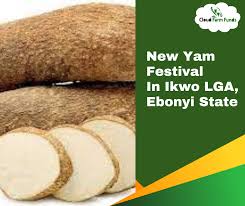
In Igbo land, of the south eastern Nigeria, yam is the most respected and honoured crop. Before its consumption in every year, it must be honoured and welcomed in a special way in this celebration of new yam festival.
The celebration takes place on different dates in different places but must be within the month of August.
Ikwo, the largest local government area in Ebonyi state is not an exception in this historical celebration. In fact, the people of Ikwo Noyo clan has a special way of celebrating their new yam (Nnesweoha) festival.
Thus, in Ikwo LGA of Ebonyi State, Nnesweoha (new yam festival) is an annual event that is highly cherished and celebrated by any true son and daughter of Ikwo, wherever he or she is. Inherited from our ancestors, the festival is the Passover Feast into the New Year, Ekenwanekwa (the first day to harvest the new yam of the new year), in the next four days being eke. Having survived the previous year, the day is heralded with joy, celebration and thanks-giving to God and the spirit of our forefathers and mothers, who lived a good life.
Nnesweoha festival is not only meant to celebrate survival from famine season, it is also very significant for other social, political and economic values for which Ikwo people are known, such as respect for elders, visits and exchange of gifts with fathers and mothers, grandfathers and grandmothers, relations and friends, obedience to the rules that bind the society together and assessment of one’s performance for the outgoing year, with a view to improving for better, come new year.
Mostly exchanged during the period of Nnesweoha festival are tubers of old yam, dry fish, bush meat, palm wine, a bunch/leaves of tobacco with potash to mix, etc. Nneswoha season is also special to the newly married couples because it is a time for them to visit, father/mother in-laws, to take dates for initiation into womanhood (Ugvuegirima/Ugvuoguruenya) of young wives, come the subsequent year. During this period, married women cook the best of dishes and visit their parents, brothers and uncles. Young men and girls fetch firewood to grandmothers, grandfathers and other aged relation. Fathers, brothers and uncles also use the opportunity to shower gift to their visiting daughters and grandchildren, with assorted items such as tubers/pieces of yam, dry meat, coconut, money and abundant blessings.
The following items are used to celebrate on Nnesweoha day: Ngvuakpa (locally prepared ground maize) in the morning, Oji with Ose Ukpara (kola and well garnished pepper), Akpaka-ebebe/Akpaka atsutsu, Emma-Okponku/Anuokponku (dry fish) in the mid-morning; Inne akahu nji (porridge of the old yam) in the afternoon and Utara with Ophe-Akpuruta, Ophe-Ukpa, Ophe Onunji (pounded yam with different delicacies of soup) etc, may be preferred, in the evening. Mme mini (Palm wine) and Karama (hot drink) are also used to wash these delicacies down the throat along the day.
Traditional/cultural music and dances of various types, such as Okpuruegede, Edege, Odabara, Ode, Okowe Ogbodogu Ayita, Ekwemgba, Egvumme Ikpobina, Igbiri, Nwogbaego, are normally used to add colour to the celebration. They are displayed in the village square and streets for people’s admiration, throughout Nwanoyo settlements.
It is the duty of those traditionally assigned in Ekpeli, the ancestral home of Ikwo, to keep, read the calendar of Ikwo and direct when Nneswoha (the new yam festival ) and Ekenwanekwa (the first day to harvest new yam for the new year) are to take place, on annual basis. Usually, the appearance of Ekpeli in Igboji, known as Ekpeli afua le Igboji, announces and marks the counting of Nneswaoha day, for the year.
Between Nnesweoha day and Ekenwanekwa day, are two days:
Ukatafa and Unuafa, marked as transitional days between the old year and new year. These two days neither belongs to the old nor the New Year, that any event, including death is not counted as belonging to the outgoing year, but shifted to the New Year. This is why the corpse of any deaths within these two days must be preserved for burial after Ekenwanekwa, and recorded as having died in the New Year.
Ukata-afa is used to visit the yam farm, inspect the yams and do some weeding of grasses and thanks-giving to God, in preparation for harvest of new yam on Ekenwanekwa day.
Unu-afa the third day after Nnesweoha, is a day of rest and opening of yam ban, to welcome the spirit of new yam that would be harvested and eaten the following day, Ekenwanekwa.
Harvesting and eating of new yam by anybody, before this Ekenwanekwa day in Ikwo, is an abomination and attracts banishment in the land, for anybody caught, until he performs the cleansing rituals, as usually prescribed by the custodians of Ikwo culture of Ekpeli.
As the Chief Priest of Ikwo Noyo, the traditional rulers, the Ozo’s and the good people of Ikwo welcome all their sons and daughters at home and in diasporas to the yearly celebration, they also uses the time to encourage and foster peaceful coexistence, social development, friendly and brotherly political participation that will bring limelight to the people of Ikwo Noyo clan.
Most important of the areas of the identity of Ikwo, are peace loving, hardworking, love for one another and our neighbours, fear of God, respect for elders and constituted authority, mentoring and assisting the young to grow by the elders, brothers and sisters, mutual aides to each other and above all portraying cherishable exemplary life, for the imitation of our counterparts everywhere in the world.
Ishiagu Town
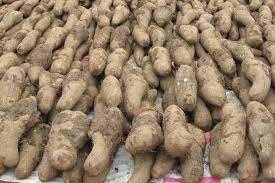
Ishiagu is a town in Ivo Local Government Area, Ebonyi State, Nigeria. Ishiagu is comprised of seventeen villages of varying sizes – one of the largest village groups in Ivo Local Government Area. The communities that make up present day Ishiagu cite a common ancestry and function as a homogeneous village group despite historical evidence indicating that the original settlers migrated from different locations at different times. The people of Ishiagu are mostly farmers, traders and civil servants. The town is blessed with abundant and fertile farmland. The Federal College of Agriculture, a research and training institution is located in Ishiagu. Ishiagu is also home to some of Nigeria’s prominent public figures. The Secretary to the Federal Government and former Senate President, Chief Anyim Pius Anyim, is from Ishiagu. Also from Ishiagi is the former Governor of Abia State, former National Chairman of the All Nigeria Peoples Party (ANPP) and leader of the newly-registered All Progressives Congress (APC) in Ebonyi State, Chief Ogbonnaya Onu.
Ozizza Town
Ozizza is a small town located at the northeastern border of Afikpo North Local Government Area. Geographically, Ozizza shares a boundary on the east with Akpoha town in Amoha Local Government Area; on the south with Cross River State (the neighboring state less than 1 mile across the Cross River); and on the northwest with Ugwuegu and Nkpogoro communities in Afikpo Town.
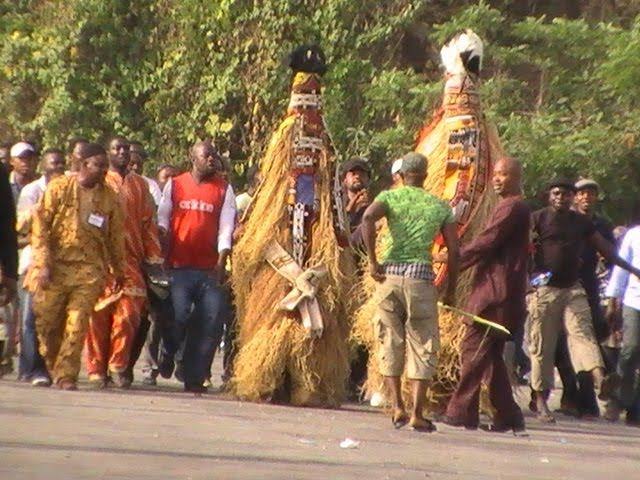
Historically and culturally, Ozizza is one of the communities that made up the village group in the Old Afikpo Division. And like the other communities in this group, Ozizza has a rich cultural and artistic heritage that has been well preserved and continues to fascinate historians till date. Today, Ozizza is slowly acquiring the attributes of a small suburban town with a growing population. The people of Ozizza are mostly farmers, fishermen and traders. The nearby Cross River provides a quick gateway to towns in the neighboring Cross River State for trading and other purposes. The Cross River also serves as a source for fishing and water transportation of goods to and from towns along the river. Ozizza has hosted some of the most memorable cultural festivals in recent memory in the Old Afikpo Division. One such event, the presentation of Okunkpo masquerades in 1993 drew hundreds of masquerades and thousands of spectators.
About The Author